
ESP-8266EX WIFI development board with Arduino compatibility, 11 I/O pins, 1 ADC pin, OTA wireless upload, onboard 5V 1A switching power supply for IoT projects in black


ESP-8266EX WIFI development board with Arduino compatibility, 11 I/O pins, 1 ADC pin, OTA wireless upload, onboard 5V 1A switching power supply for IoT projects in black
ESP-8266EX Arduino-Compatible WiFi Development Board with OTA Wireless Upload
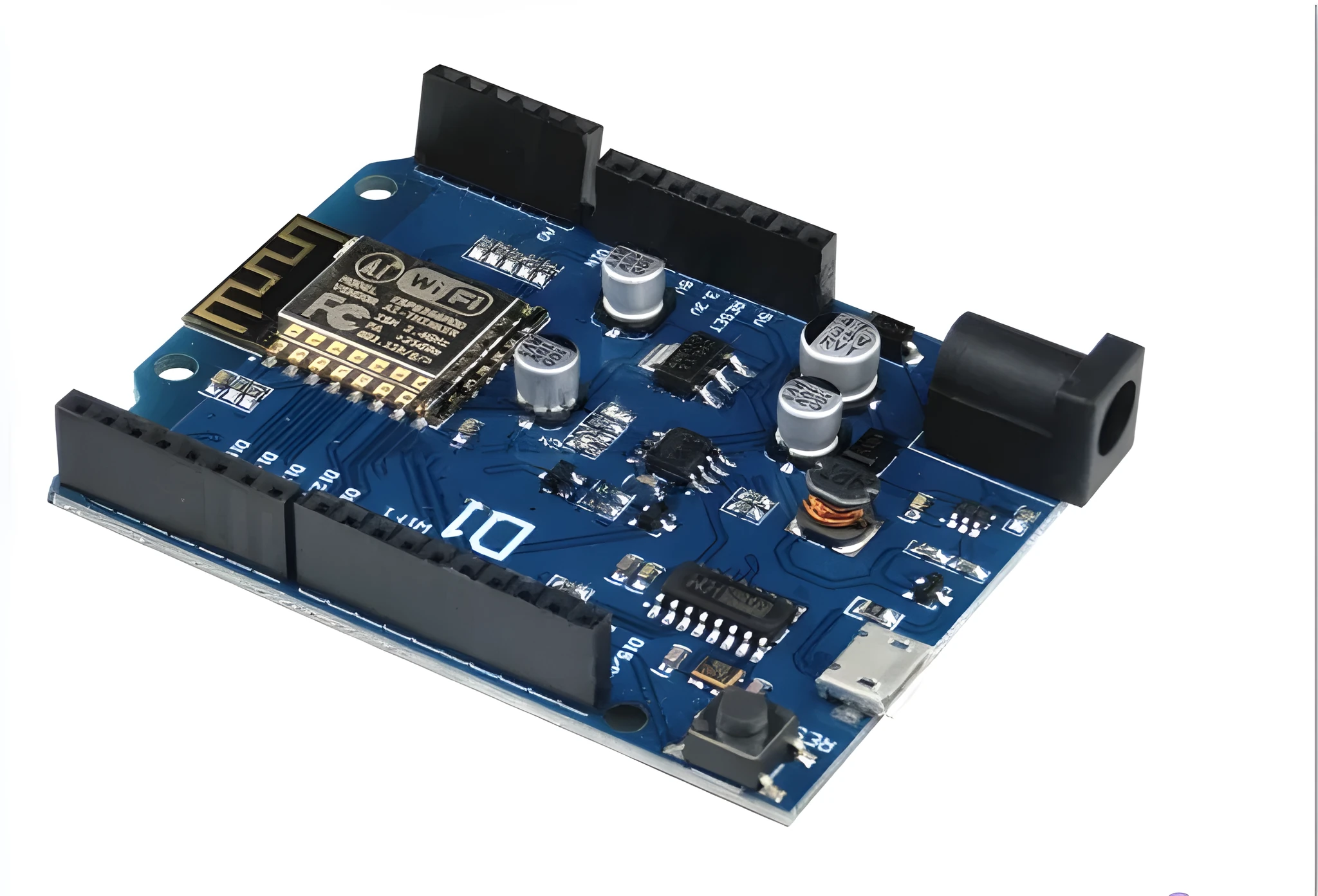
This ESP-8266EX-based WiFi development board bridges the gap between Arduino simplicity and IoT connectivity, providing a straightforward platform for wireless project development. Designed for compatibility with the Arduino IDE, it allows developers familiar with Arduino UNO workflows to extend their projects with WiFi capabilities without learning new programming environments. The board's integrated features eliminate the need for external WiFi shields or complex wiring, making wireless connectivity accessible for prototyping, educational projects, and IoT applications. With support for OTA (Over-The-Air) wireless uploads, you can update your code remotely without physical access to the board, streamlining the development process for deployed devices.
Features and Construction

The development board centres around the ESP-8266EX microcontroller, which provides both processing power and integrated WiFi connectivity in a single package. This integration simplifies circuit design compared to separate microcontroller and WiFi module combinations, reducing component count and potential connection issues. The board's construction follows standard development board conventions with clearly labelled pin headers, onboard power regulation, and accessible programming interfaces that maintain compatibility with existing Arduino shields and accessories where pin configurations align.
Material and Build
The board utilises standard PCB materials with a black coloured finish, providing the necessary electrical insulation and mechanical stability for development use. Component placement follows functional grouping principles with the ESP-8266EX chip centrally located, power regulation components positioned to minimise noise, and pin headers arranged for logical access to I/O functions. The onboard switching power supply incorporates voltage regulation circuitry capable of accepting input voltages up to 24V maximum while providing stable 5V output at 1A current capacity for powering the board and connected peripherals.
Size and Practical Fit
While exact dimensional specifications aren't provided in the source material, the board follows typical development board form factors with standard 2.54mm pin spacing that matches common prototyping accessories. The physical layout accommodates the ESP-8266EX chip, power regulation circuitry, and supporting components while maintaining accessible header pins for all I/O functions. The board's design prioritises functional density without compromising accessibility, allowing it to fit within standard project enclosures while providing sufficient space for clear pin labelling and connection points.
Uses and Placement
This development board serves multiple roles in the project development lifecycle, from initial prototyping to final deployment in IoT applications. Its Arduino compatibility lowers the learning curve for those already familiar with the Arduino ecosystem, while the integrated WiFi opens possibilities for connected projects that would normally require additional hardware. The board's feature set positions it as a practical choice for educational settings, hobbyist projects, and professional prototyping where reliable WiFi connectivity combined with accessible programming is required.
Event or Professional Use
For professional applications, the board provides a cost-effective development platform for IoT proof-of-concept projects, allowing rapid prototyping of connected devices before moving to custom PCB designs. The OTA wireless upload capability supports remote updates for deployed devices in field applications, reducing maintenance visits for code changes. The 11 digital I/O pins and ADC input accommodate a range of sensors and actuators commonly used in monitoring systems, automation projects, and data collection applications where wireless data transmission adds value.
Everyday Home Use
In home and hobbyist contexts, this board enables creation of smart home devices, weather stations, remote sensors, and other connected projects without requiring advanced electronics knowledge. The Arduino IDE compatibility means extensive existing code libraries and community support are immediately available, while the built-in WiFi eliminates the need for Ethernet shields or complex network wiring. Home automation projects benefit particularly from the board's ability to connect sensors and actuators to home networks for remote monitoring and control through web interfaces or mobile applications.
Benefits and Buying Value
This development board offers practical value through its integrated approach to WiFi-enabled project development, combining multiple functions that would normally require separate components. The elimination of external WiFi modules reduces both cost and complexity, while maintaining compatibility with the extensive Arduino ecosystem preserves access to tutorials, code examples, and community support. The board represents a balanced solution that doesn't require specialised knowledge beyond basic Arduino programming, making wireless connectivity accessible rather than exclusive.
Reuse and Low Maintenance
The board's durable construction supports repeated use across multiple projects, with standard pin headers allowing easy connection and disconnection of peripherals without soldering in early development stages. The OTA wireless upload capability significantly reduces physical handling during the development cycle, allowing code updates without direct board access once initial programming is complete. This feature extends the board's useful life in deployed applications where physical access might be difficult or require disassembly of enclosures for programming cable connection.
Why Choose This Product
This development board stands out for its straightforward integration of WiFi capability with Arduino workflow compatibility, providing a gradual path from basic Arduino projects to connected IoT applications. The inclusion of both digital I/O and analogue input options covers common sensing requirements, while the robust power supply design accommodates a range of input voltages up to 24V maximum. For developers seeking to add wireless connectivity without abandoning the Arduino ecosystem's simplicity and support resources, this board offers a practical bridge between these requirements with tested compatibility and standard programming interfaces.