
Long-range walkie talkie set VHF 136-174MHz UHF 400-520MHz with 5W/8W RF output power, lithium battery and 5-10km theoretical communication distance for outdoor, construction site and event use


Long-range walkie talkie set VHF 136-174MHz UHF 400-520MHz with 5W/8W RF output power, lithium battery and 5-10km theoretical communication distance for outdoor, construction site and event use
Dual-Band Walkie Talkie with 5-10km Range, 128 Channels and Lithium Battery
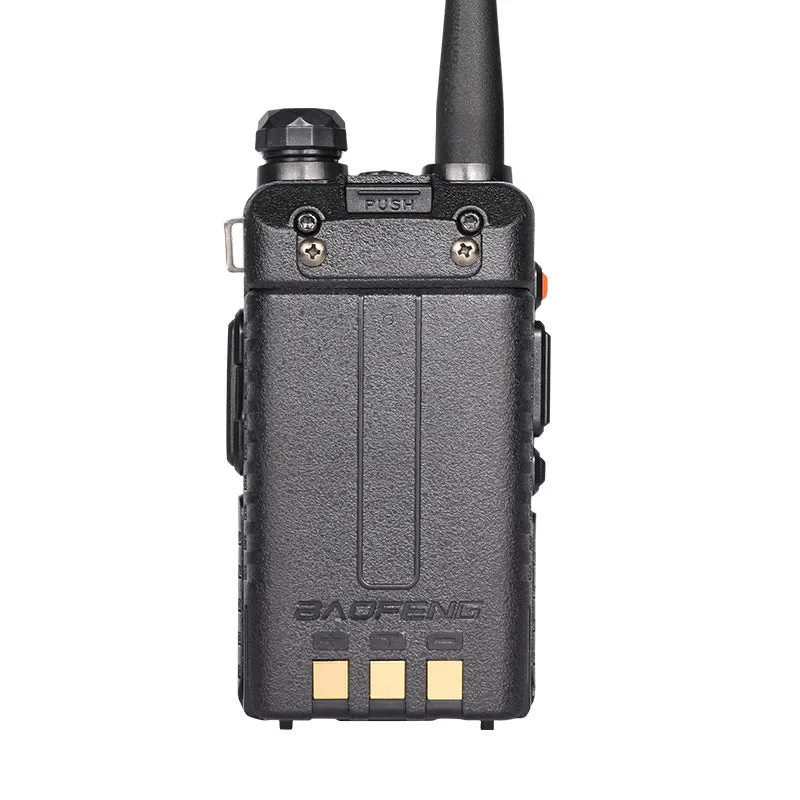
This professional-grade two-way radio provides a robust communication solution for environments where mobile phone signals are unreliable or unavailable. Operating on both VHF (136-174MHz) and UHF (400-520MHz) frequency bands, it offers versatility for various applications, from outdoor recreation and event coordination to construction site management and security operations. With a theoretical communication distance of 5-10 kilometres, it facilitates clear voice transmission over significant areas without relying on cellular infrastructure. The 'No card' communication type means it operates independently of SIM cards or network subscriptions, offering a self-contained and immediate communication tool.
Technical Specifications and Performance
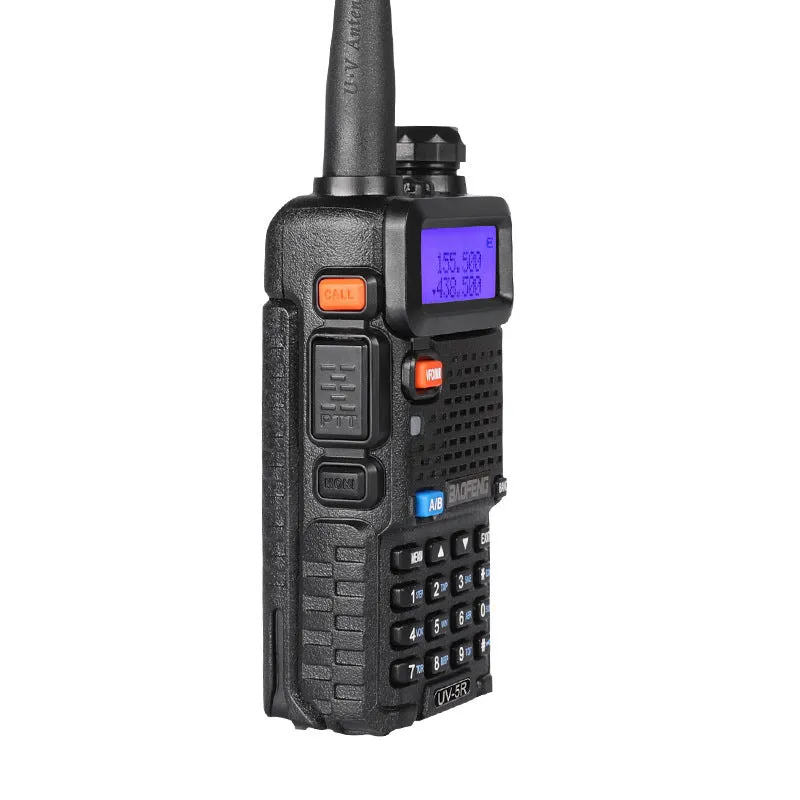
The walkie talkie's performance is defined by a series of measurable technical parameters that determine its operational capability. These specifications provide a clear understanding of its range, power, and stability in practical use scenarios.
Frequency Range and Power Output
The device covers two distinct frequency ranges: VHF from 136 to 174MHz and UHF from 400 to 520MHz. This dual-band capability allows users to select the most suitable band for their environment; VHF generally performs better in open, rural areas with fewer obstacles, while UHF can be more effective in urban settings or indoors. The RF output power is configurable at either 5W or 8W, providing a balance between communication range and battery consumption. Higher power settings can extend the effective range but will use the battery more quickly.
Communication Range and Channels
A key specification is the theoretical communication distance of 5 to 10 kilometres. This range is achieved under optimal conditions and can vary with terrain, weather, and obstructions. The unit provides 128 separate channels, enabling multiple teams or groups to operate independently on different frequencies without interference. This is particularly useful for large events, worksites, or outdoor expeditions where organised communication is essential.
Stability and Voltage
The walkie talkie maintains a frequency stability of 5 parts per million (ppm), which helps ensure clear, consistent signal transmission without significant drift. It operates on a 7.4V working voltage, supplied by its integrated lithium battery. This voltage is standard for many portable communication devices, supporting stable performance of the internal components.
Design and Practical Application
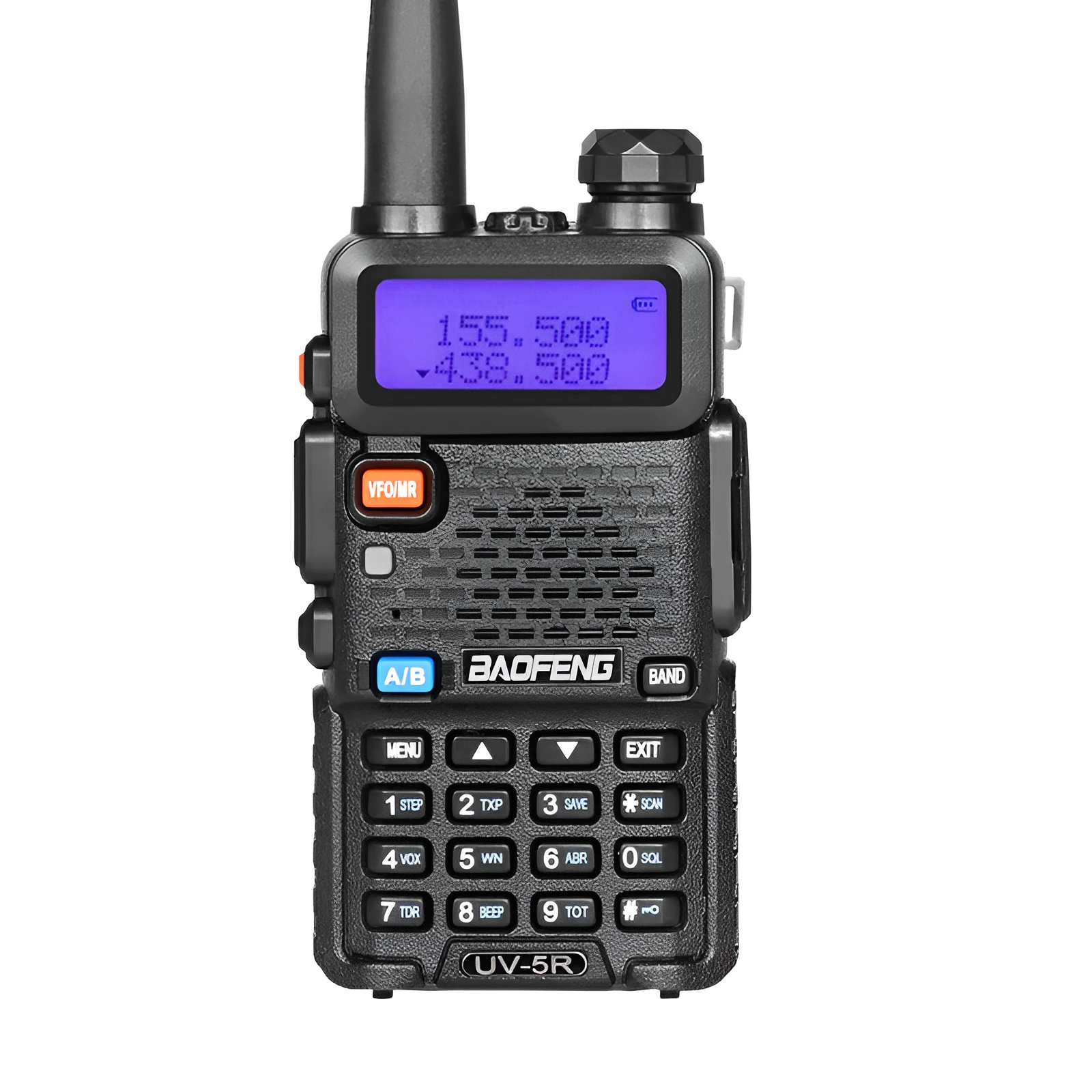
The physical design and included features of this two-way radio are focused on utility and ease of use in demanding situations. Its construction prioritises functionality and reliability for professional and recreational users alike.
Physical Dimensions and Portability
With dimensions of 110mm in height, 58mm in width, and 32mm in depth (excluding the antenna), the walkie talkie has a compact form factor. This size makes it suitable for carrying in a jacket pocket, holster, or tool belt, ensuring it remains accessible during activities. The absence of an antenna in these measurements means the overall profile may increase slightly when the antenna is attached, but the core unit remains portable.
Battery System and Operational Life
Power is supplied by a lithium battery, a common choice for portable electronics due to its favourable energy density and rechargeability. The stated theoretical battery life is 2500 hours, which indicates a very long standby or low-power usage time. In practical use, actual battery life will depend heavily on factors like transmission frequency, power output setting (5W vs 8W), and monitoring function usage.
Monitoring Function and Use Cases
The integrated monitoring function allows a user to listen for activity on a channel before transmitting, helping to avoid interrupting ongoing communications. This feature is standard in professional two-way radios. Typical use cases for this device include outdoor team activities like hiking or cycling, coordination at festivals or sports events, communication across construction sites or warehouses, and as a backup system for security personnel or event staff where mobile networks are congested.
Benefits and User Value

Choosing this walkie talkie offers several practical advantages for groups requiring dependable, instant communication. Its value lies in its technical capabilities, independence from networks, and straightforward operation.
Network Independence and Immediate Use
Unlike mobile phones, this device does not require a SIM card, network subscription, or cellular signal. It establishes a direct radio link between units, making it usable in remote locations, underground, or during network outages. This provides a reliable fallback communication method and eliminates ongoing call costs once the hardware is purchased.
Organised Multi-Channel Communication
The availability of 128 channels supports complex communication structures. Different departments, teams, or user groups can be assigned specific channels, reducing cross-talk and improving operational efficiency. This is a significant benefit for event management, large-scale projects, or any scenario involving multiple coordinated parties.
Why This Specific Model
This walkie talkie combines a substantial theoretical range (5-10km) with dual-band frequency flexibility (VHF/UHF) and high channel capacity (128 channels). The adjustable RF power (5W/8W) and long theoretical battery life add to its adaptability for various duty cycles. For users needing a capable, licence-free (subject to local regulations) two-way radio for group coordination over medium distances, this model presents a feature-rich option based on its published specifications.
