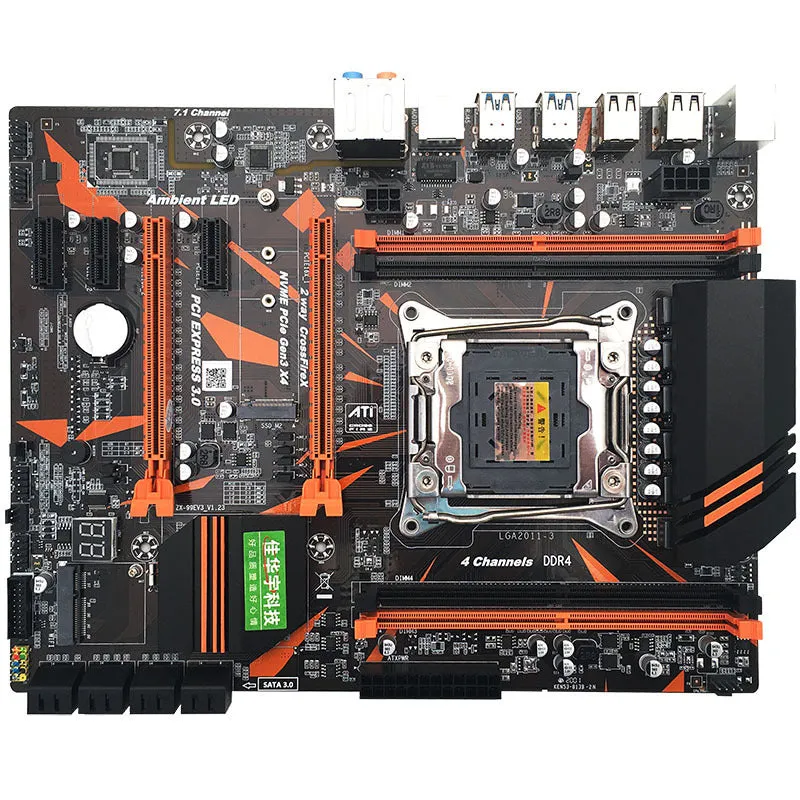
X99 computer motherboard with LGA2011-3 CPU socket supports four-channel DDR4 memory and includes integrated 7.1 channel audio chip and RTL8111H Gigabit network card for high-performance desktop computing


X99 computer motherboard with LGA2011-3 CPU socket supports four-channel DDR4 memory and includes integrated 7.1 channel audio chip and RTL8111H Gigabit network card for high-performance desktop computing
X99 Desktop Motherboard with LGA2011-3 Socket and Quad-Channel DDR4 Memory Support

This X99 series motherboard provides a comprehensive platform for building high-performance desktop computer systems, centred around the LGA2011-3 processor socket that accommodates both Intel Core i7 consumer CPUs and Xeon E5 v3 series workstation processors. The board's architecture supports intensive computing applications through its four-channel DDR4 memory configuration, which can utilise either standard desktop memory modules or ECC server memory for enhanced data integrity. Integrated features including 7.1 channel audio processing and Gigabit Ethernet connectivity reduce the need for additional expansion cards, while multiple PCI-E slots and storage interfaces offer flexible upgrade paths. With diagnostic tools including LED displays and audible alerts, the motherboard simplifies troubleshooting during system assembly and maintenance.
Processor and Memory Configuration

The motherboard's central component is its LGA2011-3 CPU socket, designed to accommodate Intel's high-performance processor families including specific mention of 5820K and 5960X models within the Core i7 and Xeon E5 v3 series. This socket configuration determines compatible cooling solutions and thermal management requirements for the connected processor. Memory support extends across four DDR4 DIMM slots that operate at 2400MHz or 2333MHz frequencies, with the important specification that Core i7 processors cannot utilise server memory modules simultaneously.
CPU Compatibility and Limitations
Processor compatibility includes the 2011-v3 socket designation with support for both consumer and workstation Intel processors, though users must note the specific restriction regarding memory module compatibility when using Core i7 series CPUs. The socket's pin configuration ensures proper physical and electrical connection with supported processors, while the surrounding power delivery system utilises both 24-pin main power and 8-pin CPU power connectors. This dual power connection arrangement provides stable voltage to the processor across varying load conditions, with the motherboard implementing four distinct power modes to balance performance and efficiency.
Memory Architecture and Capacity
Four DDR4 memory slots arranged in quad-channel configuration allow installation of up to four 32GB modules for maximum 128GB total system memory, operating at supported frequencies of 2400MHz or 2333MHz. The motherboard accepts both standard unbuffered desktop memory and registered ECC server modules, though not simultaneously with Core i7 processors according to manufacturer guidance. This memory configuration benefits memory-intensive applications including content creation, virtualisation, and scientific computing where large working datasets are common.
Storage and Expansion Interfaces
Storage connectivity includes eight SATA3.0 ports supporting traditional hard drives and SSDs alongside one M.2 PCIe NVMe interface designed for high-performance solid-state storage operating at full bus speeds. Expansion capabilities extend through two PCI-E x16 slots suitable for graphics cards or other high-bandwidth expansion cards, complemented by three PCI-E x1 slots for lower-bandwidth additions. This interface combination supports multiple storage devices alongside dedicated graphics solutions for gaming, rendering, or computational workloads.
Integrated Features and Connectivity

Beyond core processor and memory support, the motherboard integrates several features that reduce dependency on additional expansion cards while maintaining essential connectivity options. The integrated 7.1 channel audio chip provides surround sound output without requiring separate sound card installation, while the RTL8111H Gigabit network controller delivers wired Ethernet connectivity at standard Gigabit speeds. External interfaces include legacy PS/2 connections alongside modern USB 2.0 and USB 3.0 ports, with the physical board construction featuring black colouration that may vary between production batches.
Audio and Network Integration
The motherboard incorporates a dedicated audio processing chip that generates 7.1 channel surround sound output through standard 3.5mm audio jacks located on the rear I/O panel. This integrated solution eliminates the need for separate sound card installation while providing adequate audio quality for most desktop applications including gaming, media playback, and communication. Network connectivity is handled by the integrated RTL8111H controller chip supporting standard Gigabit Ethernet speeds through the rear-panel RJ45 connector, with potential WiFi expansion available through dedicated interface connections on the board itself.
Physical Construction and Design
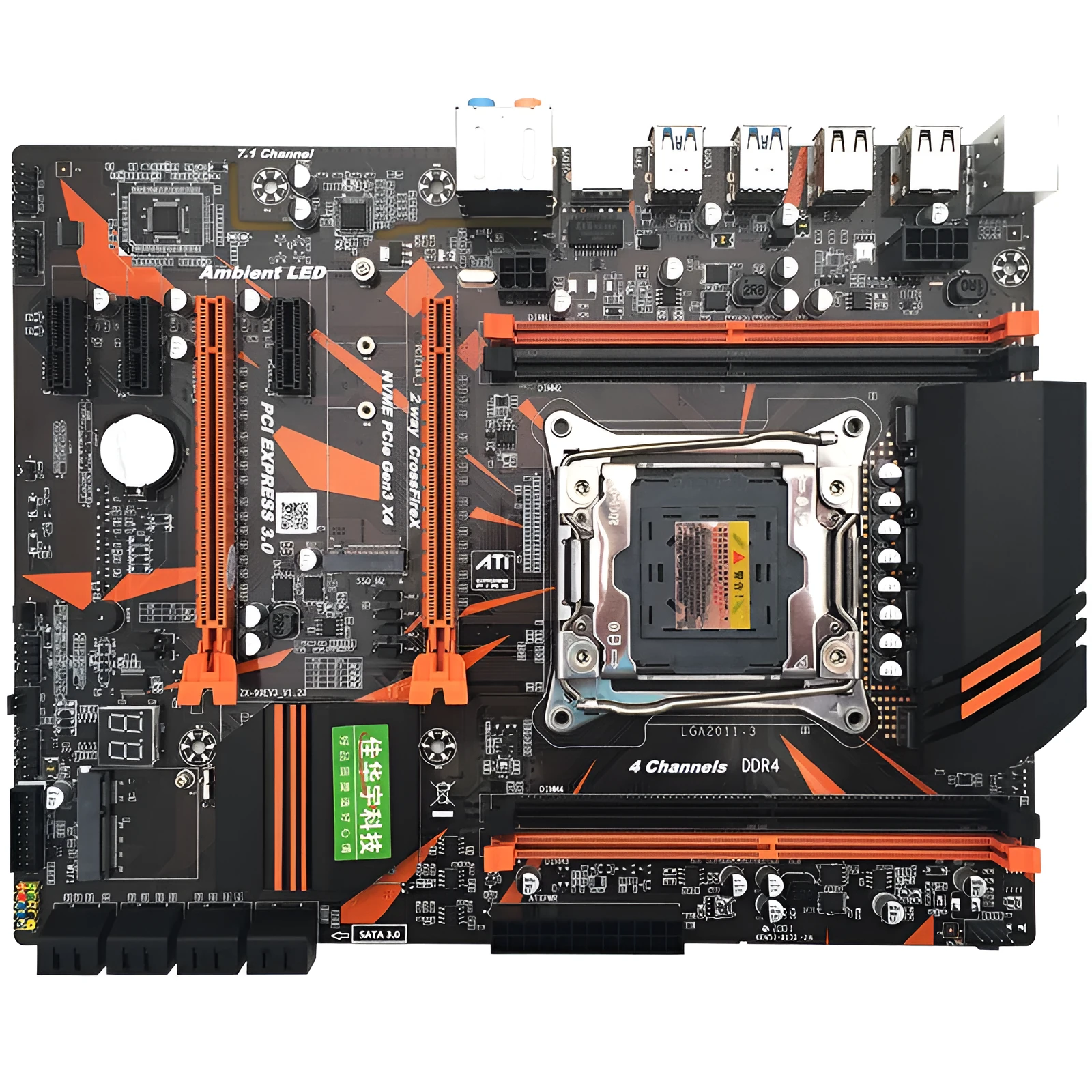
Manufactured using standard ATX form factor dimensions, the motherboard features black PCB colouration with the acknowledgement that slight colour variations may occur between different production batches. Component placement follows conventional ATX layout with CPU socket centred, memory slots positioned alongside, and expansion slots arranged toward the bottom edge. The board includes diagnostic aids including an eight-LED display for troubleshooting codes alongside an audible buzzer alert system, while power delivery utilises both 24-pin main and 8-pin CPU connectors with four configurable power modes.
Rear Panel and External Interfaces
Rear I/O panel connectivity includes PS/2 keyboard/mouse combination port, four USB 2.0 interfaces, four USB 3.0 ports, Gigabit Ethernet RJ45 connector, and 7.1 channel audio jacks for speaker and microphone connections. This interface selection balances legacy compatibility with modern connectivity standards, while internal headers provide additional USB and audio connections for front-panel chassis integration. The board's design acknowledges continuous optimisation through manufacturing with potential specification adjustments that may precede documentation updates.
Warranty and Support Information
Manufacturer support includes a three-year warranty policy with distinct service phases: one year of free warranty service followed by two years of maintenance available at cost. This warranty structure provides initial defect coverage while offering extended support options for longer-term ownership. The warranty is administered through either the retail shop or manufacturer directly under standard three-guarantee service provisions, with the product subject to continuous optimisation that may introduce specification changes between production batches.
Warranty Coverage Details
The manufacturer provides three years of total warranty coverage divided into distinct service periods: the first year includes free repair or replacement for manufacturing defects, while the subsequent two years offer maintenance services at cost to the consumer. This warranty structure is described as "Three Guarantees" service consistent with consumer protection standards, administered through either the purchasing retailer or the manufacturer directly depending on service requirements and geographical location.
Continuous Product Optimisation
Product specifications and physical characteristics including slot colouration and component placement may vary between production batches as the manufacturer implements continuous optimisation and upgrading processes. These changes may precede updates to product documentation and marketing materials, with the manufacturer noting that page introductions might not reflect the most current specifications. This optimisation approach allows incremental improvements without requiring complete product redesign or model numbering changes.
Compatibility Considerations
Important usage considerations include the specific restriction that Core i7 series processors cannot utilise server memory modules simultaneously, requiring users to select either standard desktop memory or forgo Core i7 processor compatibility. Additionally, the 8-pin CPU power connector requires connection to the power supply for full functionality, though the system may operate with only 4-pin connection in reduced capability modes. These considerations ensure proper system configuration and prevent compatibility issues during assembly and operation.